
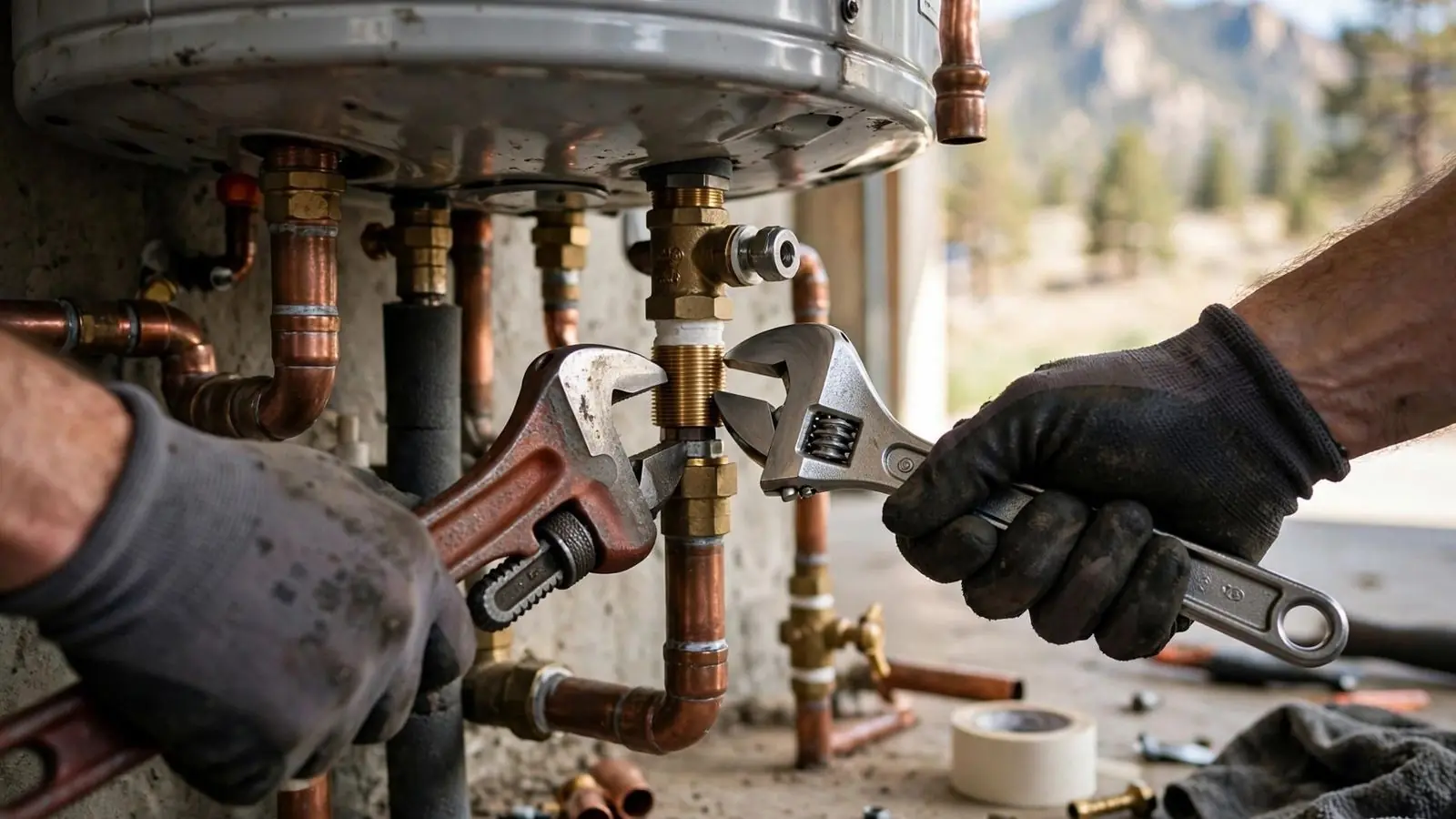
How a heat pump water heater works
A heat pump water heater has a small compressor and a fan on top of an insulated tank. The fan pulls in room air, the compressor extracts its heat and the tank absorbs it. The unit also cools and dries the air around it a little, which matters in a closet and can be a benefit in a warm garage.
Most models also have standard electric elements as a backup. They switch on when demand is high or the room is too cold for the heat pump to work well. Many models let you choose between an efficiency mode and a faster hybrid mode.
What the space needs
A heat pump needs air to draw from. A tight closet starves it, and it will run on backup elements or shut down. Manufacturers publish a minimum room volume or ducting guidance in the installation manual, so check the model you are considering before you buy.
Space and utility checklist
- Enough open air volume, or ducting, as the manual requires.
- Clearance above for the fan and filter access.
- A floor drain or a place to run the condensate line.
- A dedicated electrical circuit of the right size.
- Room for an expansion tank where the system needs one.
- Noise tolerance, because the fan hums.
- A location that stays above the minimum operating temperature.
The condensate matters. As the unit pulls moisture out of the air, it produces water that must drain away by gravity or a small pump. A garage with a floor drain is easy. An interior closet may need a line run to a laundry standpipe or a sink.
Electrical and venting differences from a gas tank
Moving from a gas tank to a heat pump removes the flue and the gas connection, but it adds an electrical circuit. Many heat pump units need a dedicated 240 volt circuit, and some models run on 120 volts. Your panel has to have room for it. If the panel is full or old, that becomes part of the project.
| Factor | Gas tank | Standard electric | Heat pump |
|---|---|---|---|
| Fuel | Natural gas | Electricity | Electricity, from air heat. |
| Flue needed | Yes | No | No. |
| Condensate drain | No | No | Yes. |
| Space and air | Vent clearance | Little | Open air or ducting. |
| Install complexity | Moderate | Simple | Moderate to high. |
Seismic strapping and code items still apply
California Health and Safety Code section 19211 requires new and replacement water heaters to be braced, anchored or strapped against earthquake motion. A heat pump unit is tall and top heavy, so the strapping matters even more. The California Plumbing Code also addresses expansion tanks in section 608.3 for closed systems.
Incentives and operating cost
Utilities and programs sometimes offer rebates on heat pump water heaters, and the details change. Ask your electric utility and your gas provider what is open right now before you buy, and read the conditions, because some programs require a particular model or a permit.
Savings depend on how much hot water you use and what you pay for energy. A household that uses a lot of hot water gains more. A two-person home with a small tank may take a long time to see the difference.
Questions to settle before you buy
Start with the location, because it decides everything else. Measure the space, note where the drain is and look at the panel. Then ask the installer to confirm the circuit size, the condensate route and the clearance above the unit in writing, using the manufacturer's manual as the standard.
Ask also about noise and about the operating mode you will use. A heat pump in efficiency mode recovers slowly after a heavy draw, which suits a small household. A busy household may want the hybrid mode, which uses the backup elements more often and trades some savings for speed.
Finally, decide what happens to the old unit and the old venting. A gas heater leaves a flue and a gas line behind, and both have to be capped or removed correctly. That work belongs to the installation scope, so make sure it is in the quote.
What this means for Lynwood homes
Census estimates put about 47 percent of Lynwood housing before 1950, with a median build year near 1951. Many older homes have a small hall closet or a tight utility room for the heater, which is the hardest place to put a heat pump. A detached or attached garage is a much better fit.
Liberty Utilities' water quality report for its Lynwood system lists hardness from 99 to 220 ppm, averaging 160 ppm. South Gate's city report averaged 226 ppm. Scale affects heat pump tanks and elements like any other, so plan on an annual flush and an anode rod check.
The City of Lynwood adopts the California Plumbing Code in Chapter 11-9 of its municipal code. Whether your job needs a permit depends on the work, so ask the community development department what applies.
Call and tell us where your heater sits. We will confirm the space, the power and the drain before you buy.
If the unit has to go in a tight closet, a standard tank or a tankless heater may be the simpler path. Homeowners just across the line in the 90280 ZIP code can find local details on our South Gate page.
Questions homeowners ask about this
Yes, the mild climate suits them. They do their best work in a space that stays above the minimum operating temperature in the manual, such as a garage or a ventilated utility room.
Only if the closet has enough air volume or the unit is ducted. Check the manufacturer's room volume requirement before you buy.
Yes. It produces condensate, which must drain by gravity or a pump.
Many models need a dedicated 240 volt circuit. Some run on 120 volts. Your panel capacity decides which is practical.
Yes. California Health and Safety Code section 19211 requires seismic bracing for new and replacement water heaters.
Not by itself, but older homes often have a small closet and an older panel. Those two things decide whether the install is simple or large.