
When a leak is an emergency
Water through a ceiling, a spraying pipe or a floor that feels warm and wet is not a wait-and-see problem. Water finds wiring, insulation and subfloor quickly, so the first priority is stopping the supply. The main shutoff is usually near the water meter or on the house side of the foundation.
What to do while you wait
These steps can save a floor.
Meter still running? Start here
The fastest home test costs nothing. Turn off every tap and appliance, then watch the small dial or triangle on the water meter. If it moves, water is going somewhere. That is the same test many utilities suggest for a surprise high bill, and it is the first thing we check too.
Liberty Utilities operates a Lynwood water system, publishes a water quality report for it and lists customer service at 1-800-727-5987. Your bill names your provider. If the meter moves with everything off, call us and your utility, because a leak on the utility side of the meter is a different repair from one in your house.
Over in South Gate, the city's water division takes leak reports at 323-563-5790. Our South Gate page lists the details for homes on that side of the line.
How we find a leak without demolition
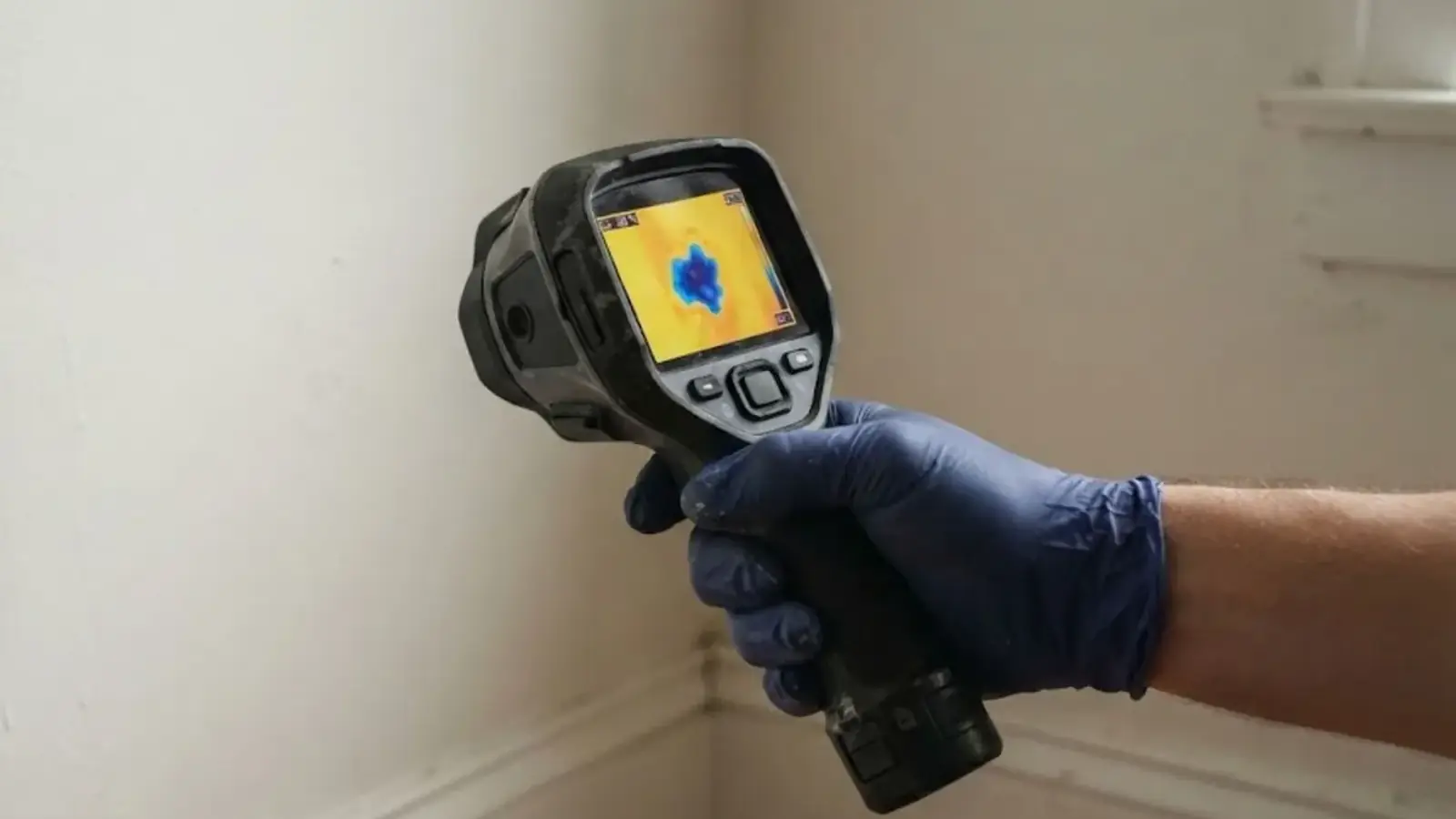
We match the tool to the symptom. Acoustic listening devices pick up the sound of water escaping a pressurized pipe. Thermal cameras show temperature differences from hot water lines or damp materials. Tracer gas and pressure testing narrow a leak down on a long run. Moisture meters confirm what the other tools suggest.
| Symptom | Likely location | Tool we reach for |
|---|---|---|
| Meter runs with fixtures off | Service line or inside the home | Pressure test, acoustic listening. |
| Warm spot on the floor | Hot water line under the slab | Thermal camera, then listening. |
| Stain on ceiling or wall | Supply or drain above the stain | Moisture meter, thermal camera. |
| Low pressure in the home | Leak between meter and house | Pressure test, acoustic locator. |
| Wet crawlspace or soft ground | Under-house pipe or irrigation | Visual access, acoustic locator. |
Ceiling, wall and under-house leaks
Water travels along framing before it shows. A stain on a ceiling can be several feet from the real source, and a wet baseboard may come from a drain two rooms away. Moisture mapping with a thermal camera shows the wet footprint so we open the smallest possible hole.
Homes with raised foundations, which are common among older Lynwood houses, have crawlspaces where supply and drain lines are visible from below. We inspect those first because a leak that is simply dripping into the soil can run for months without a stain upstairs.
Signs you may have a hidden leak
- The water meter moves with every fixture off.
- A bill that has risen without a change in use.
- The sound of running water when nothing is on.
- Warm patches on the floor or hot water that takes longer to arrive.
- Musty smell, mold or peeling paint on a wall.
- Soft or sunken ground near the foundation or meter.
Irrigation, yard and pool leaks
A broken sprinkler line can waste thousands of gallons before the lawn looks wet. We isolate the irrigation system at its shutoff and test it separately so you know whether the loss is in the yard or in the house.
Pool and spa leaks follow the same logic. A bucket test and pressure test on the plumbing separate evaporation from a real leak. If the system is leaking, the repair is a plumbing problem we can address.
Once a leak is found, the repair follows the California Plumbing Code, which is based on the Uniform Plumbing Code (UPC), and the permit question is answered by the city.
Call the 24/7 line. We will ask about the meter, the bill and any stains, then send the right detection tools.
What affects the price of leak detection
We give a clear price before work starts. These are the usual drivers.
Many policies cover resulting damage but not the pipe itself, and often exclude long-term seepage. Ask your insurer before work and keep your findings. Want your real number? Call (213) 672-5590.
When the leak turns out to be a failed pipe, we move to burst pipe repair or, for a pipe that has failed repeatedly, repiping. If your high bill points to a running toilet instead, our toilet repair page explains the usual causes.
Common questions about leak detection
Yes. If water is actively spraying or a ceiling is sagging, shut off the main valve and call the 24/7 line. We send a plumber with detection tools as soon as one is available.
Turn off everything inside and watch the meter. If it moves, water is leaking somewhere after the meter or at the meter. A leak before the meter is the utility's responsibility. A plumber or the utility can confirm which side.
Usually, yes. Acoustic, thermal and pressure tools pinpoint most leaks, so we open only the area that needs access.
A toilet that runs, a dripping faucet, an irrigation leak or a hidden pipe leak can all raise it. A meter test tells you whether the loss is real before you pay for repairs.
We test the plumbing portion with pressure tests and listening tools. For a pool shell or liner leak, a specialist may also be needed.
Detection locates the leak and repair is quoted after. You see the price before any repair work starts.