
When a slab leak is an emergency
A hot water line leaking under a slab warms the floor above it and wastes water and energy continuously. A cold line can saturate the soil and push moisture through the slab. Either way, the leak is unlikely to stay small, and the water keeps flowing until the main is closed.
What to do while you wait
These steps limit the damage until a plumber arrives.
Why slab leaks happen
Plumbing lines embedded in concrete are exposed to soil movement, abrasion and chemical corrosion. Many post-war California homes were built on concrete slabs, and about 35 percent of Lynwood housing dates from the 1950s and 1960s, according to Census estimates. Those decades commonly used copper tubing under slabs, which can develop pinholes over time.
Water chemistry plays a role too. Liberty Utilities' Lynwood system report lists hardness from 99 to 220 ppm, and South Gate's city water averaged 226 ppm in its 2021 report. Hard water is common in the area, and mineral-rich water can shorten the life of some pipe materials. It is a factor we consider, not a certainty, because pipe age and soil matter as well.
Signs of a slab leak
- A warm or hot spot on a floor with no heating source.
- The water meter moves when all fixtures are off.
- The sound of running water under the house.
- A sudden, unexplained jump in the water bill.
- Damp carpet or flooring near a wall.
- Cracks in tile or baseboard gaps that were not there before.
How we locate the leak
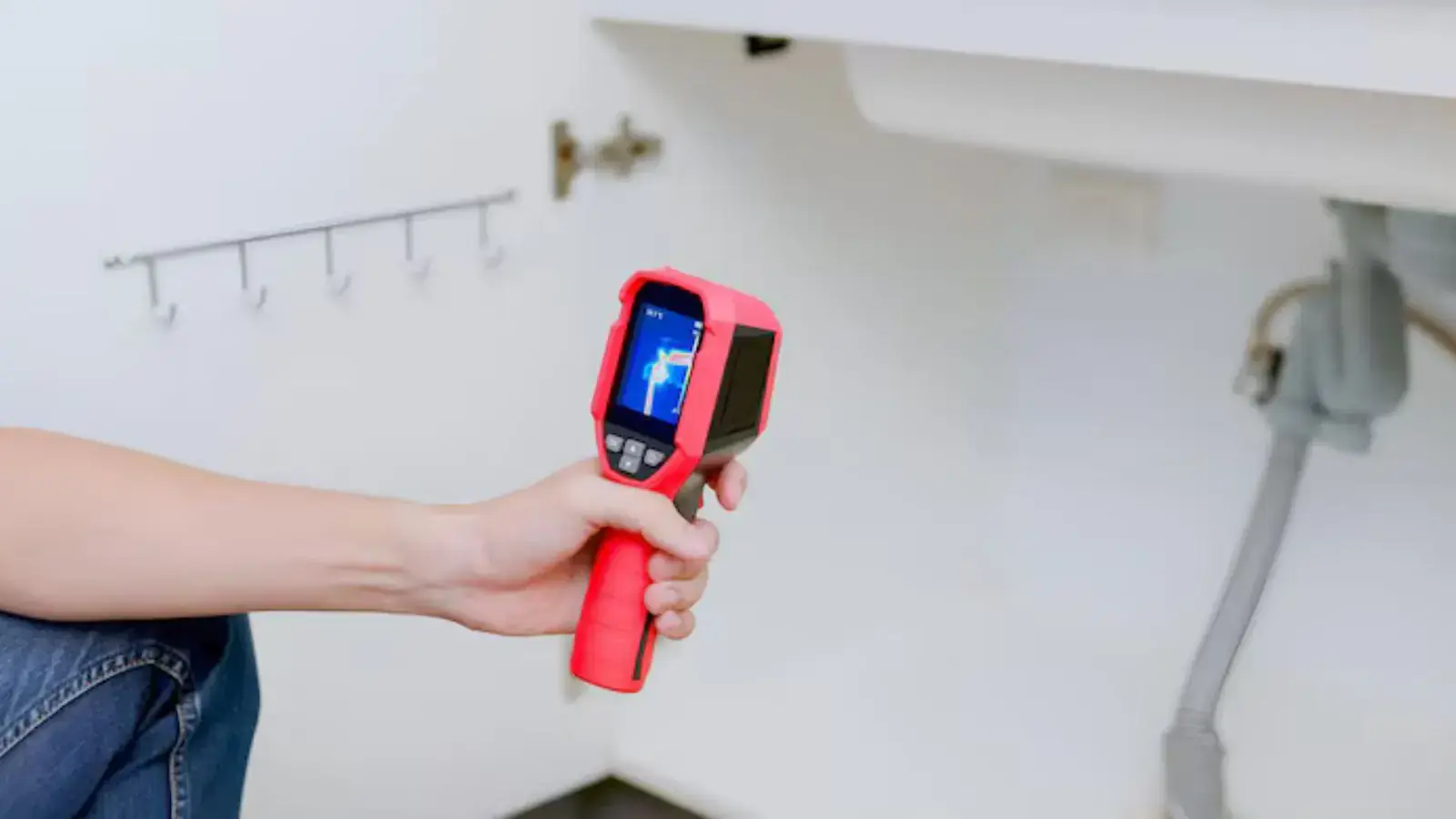
We start with a pressure test to confirm the leak is on the supply side and then isolate which line it is on. Acoustic ground microphones listen along the floor, and a thermal camera shows warm patches on a hot line. The goal is a marked spot on the floor, so any work is limited to one area.
| Repair path | How it works | Best fit |
|---|---|---|
| Spot repair through the slab | Break the slab at the marked spot, repair the pipe, patch concrete | A single leak on an otherwise good line. |
| Reroute through walls or attic | Abandon the slab line and run new pipe above ground | Multiple leaks or a repeated failure. |
| Repipe the affected line | Replace the full run in copper or PEX | A line near end of life. |
| Epoxy lining | Coat the inside of the pipe to seal leaks | Selected cases, and only where the pipe condition allows it. |
Rerouting is often the practical answer for a line that has leaked more than once. It removes the buried pipe from the equation and puts the new line where it can be reached later. Where the whole system is aging, repiping may be the more economical path.
Insurance and documentation
Slab leak claims often involve questions about cause and the cost of access. Keep photos of the damage, the meter reading and any invoices from detection and repair. We provide a written description of what we found and where, which supports a claim conversation with your insurer.
Call the 24/7 line. A plumber with acoustic and thermal tools will find the leak before opening the slab.
What affects the price of slab leak repair
We give a clear price before work starts. The main variables are below.
Insurers often treat the resulting water damage differently from the cost of fixing the pipe. Ask before work starts. Want your real number? Call (213) 672-5590.
For a quick look at nearby service, see our South Gate page. If the leak is above the floor instead of in it, burst pipe repair covers that case.
Common questions about slab leak repair
Yes. Shut off the main valve and call our 24/7 line. We send a plumber with detection tools.
Warm floor spots, a running meter with all fixtures off, the sound of water under the house, higher bills and damp flooring are the common signs.
Sometimes. If one line leaks in one spot, we may repair through the slab. If it is leaking repeatedly, rerouting above ground can avoid the concrete.
Coverage varies by policy. Some pay for resulting damage and for the access cost. Many do not pay for the pipe itself. Ask your insurer before repairs.
A spot repair can be a day. Rerouting and repipes take longer and depend on the home's layout. We provide a schedule with the quote.
Usually yes. We keep the work area contained and restore access to rooms as soon as it is safe.