When a toilet problem is an emergency
A toilet that overflows pushes dirty water across the floor and into walls and subfloor. A base leak can rot the floor under the toilet over months. Both are worth fast action, and both are easy to slow down while you wait.
Stop an overflowing toilet
Do these in order before the plumber arrives.
Common toilet problems and causes
Signs your toilet needs repair
- Water rising or overflowing when flushed.
- A tank that keeps running or refills often.
- Water around the base of the toilet.
- A weak or slow flush.
- A rocking toilet.
- A tank that sweats or leaks.
Most clogs are in the toilet trap or the short drain beneath it. A closet auger clears many. If the same toilet clogs again and again, the cause may be a partial blockage deeper in the line, a poor vent or a damaged pipe.
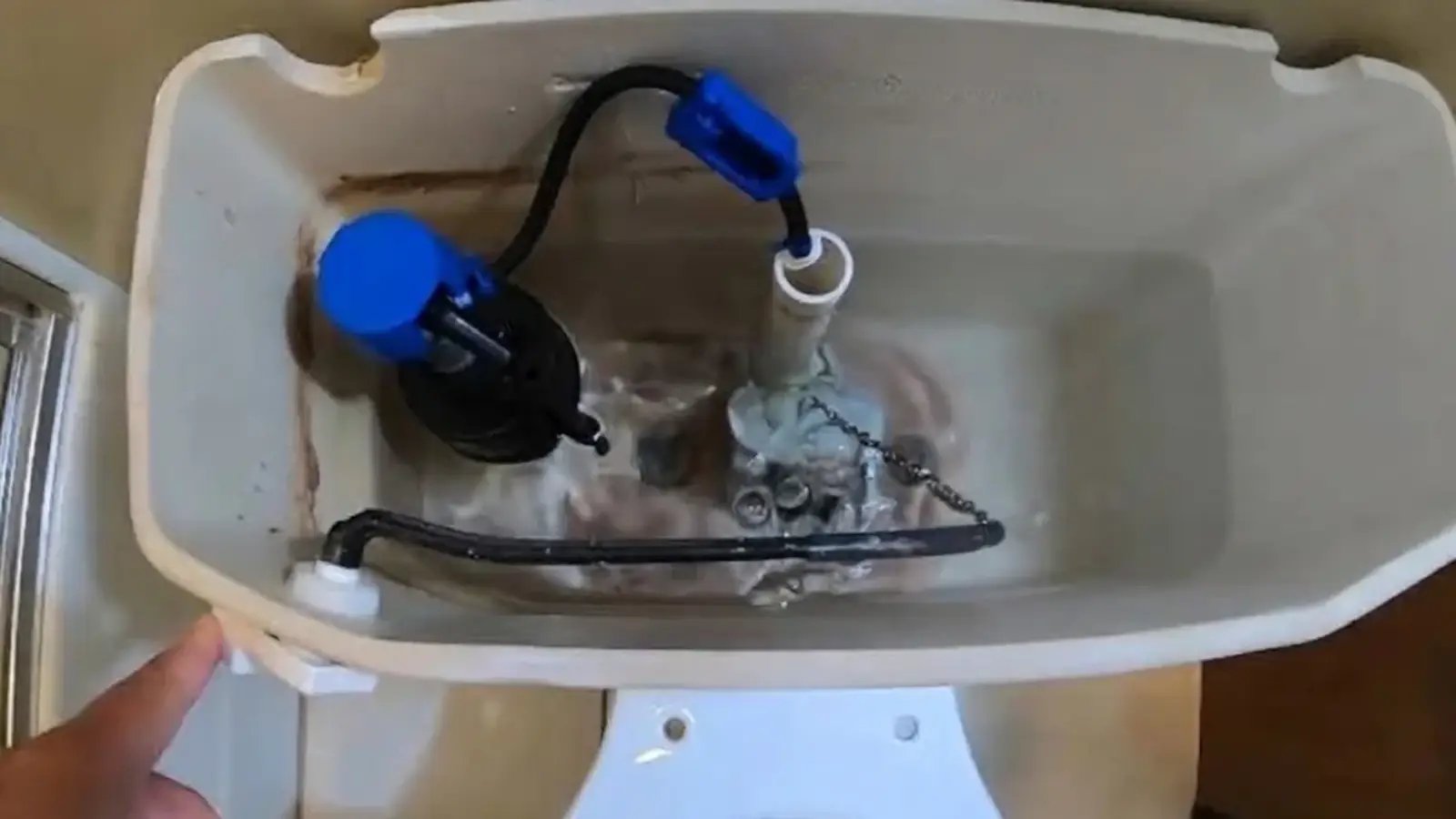
A running tank is usually a worn flapper, a fill valve that no longer shuts off or a chain that is too tight. These are inexpensive parts, but a running toilet can waste a surprising amount of water and show up on your bill.
Leaks at the base
Water at the base usually points to a failed wax ring, loose closet bolts or a cracked flange. The wax ring seals the toilet to the drain. If the floor feels soft near the toilet, stop using it and call, because moisture may have reached the subfloor.
| Symptom | Likely cause | Typical repair |
|---|---|---|
| Constant running | Worn flapper or fill valve | Replace the part. |
| Weak flush | Clogged rim jets or low tank water | Clean jets, adjust the fill level. |
| Rocks side to side | Loose bolts or a failed flange | Reset the toilet, repair the flange. |
| Water at the base | Failed wax ring | Pull the toilet and replace the seal. |
| Repeated clogs | Deeper blockage or vent problem | Cable the line, camera if needed. |
Older homes and low-flow toilets
Census estimates place about 47 percent of Lynwood homes before 1950. Those homes often have older cast iron or clay drains, and a toilet that clogs more than once a month may be telling you the line is rough inside. A low-flow toilet in an old line can also struggle because less water carries waste.
Replacing a toilet is straightforward when the flange and floor are sound. We check the flange height, the shutoff valve and the supply line, and replace worn parts so the new toilet does not inherit an old problem.
A replacement toilet and its connections fall under the California Plumbing Code, which is based on the Uniform Plumbing Code (UPC).
Close the shutoff valve and call the 24/7 line. We will tell you what to expect on arrival.
What affects the price of toilet repair
We give a clear price before work starts. These items shape it.
Home policies often cover sudden overflow damage but not wear. Photograph the area and ask your insurer. Want your real number? Call (213) 672-5590.
We also serve the 90280 ZIP code in South Gate, as described on our South Gate page. If the toilet is part of a bigger pattern, sewer inspection shows what is happening in the line.
Common questions about toilet repair
Yes. Our 24/7 line is answered day and night. Close the shutoff valve behind the toilet and call.
A partial blockage in the drain, a poor vent or a damaged pipe can all cause repeat clogs. A cable and a camera inspection find the cause.
A failed wax ring, loose bolts or a cracked flange is the usual cause. Stop using the toilet if the floor feels soft.
A worn flapper or fill valve is the most common cause. Both are inexpensive to replace.
Yes. We remove the old one, check the flange, set the new toilet with a new seal and test it.
That points to the main line, not the toilet. See our drain cleaning page and call right away.