Hydro jetting versus a cable machine
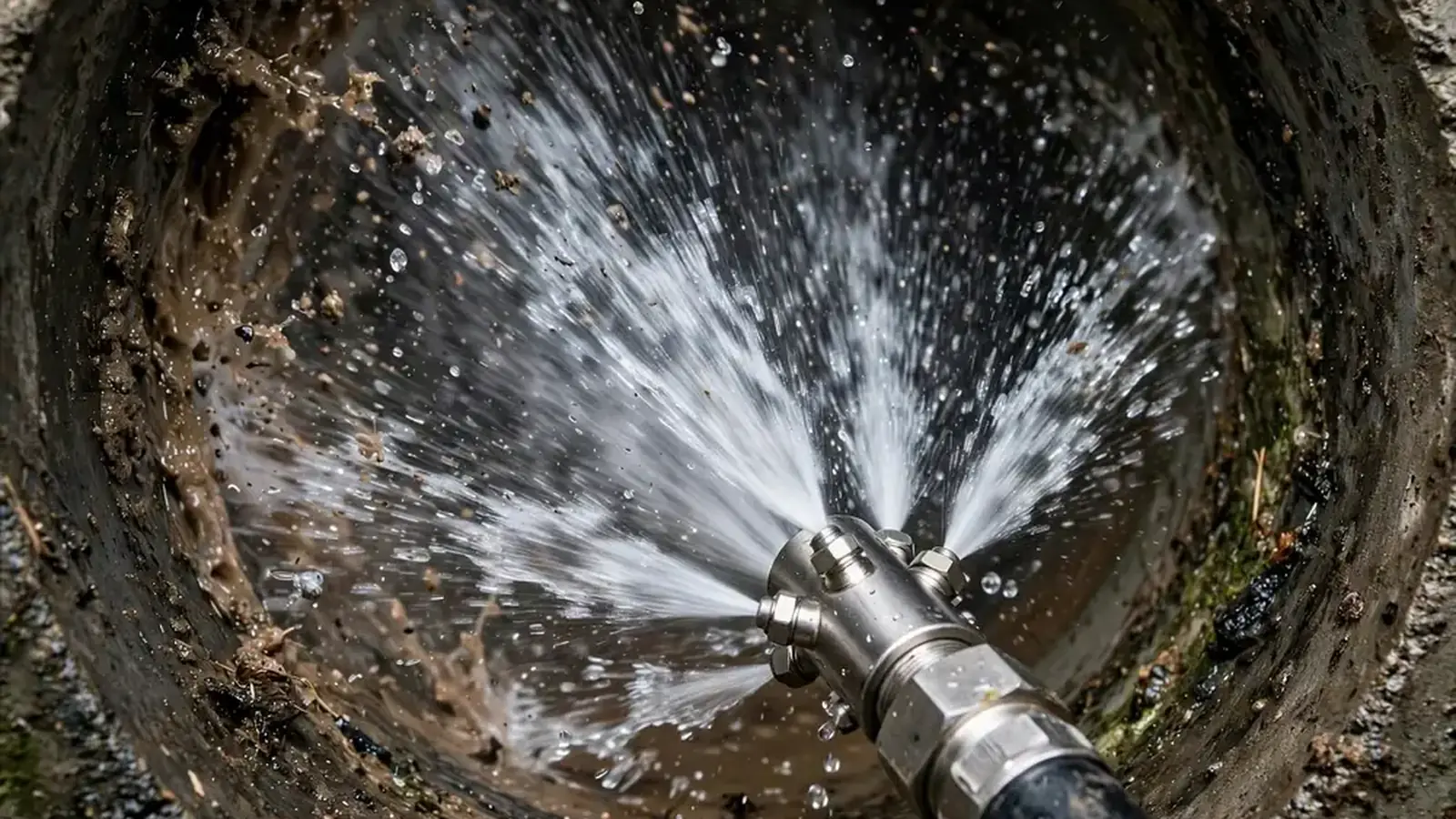
A cable machine spins a cutting head that bores through a blockage. It restores flow quickly, but it leaves the pipe wall coated. Jetting sends water from a nozzle with several rear-facing jets that pull the hose forward and wash the full circumference of the pipe.
The difference shows in how long the line stays clear. Grease and mineral scale cling to the wall, and a cable only opens a channel through them. Water at several thousand psi lifts the film off. That is why we recommend jetting when a line has been cabled more than once.
Sewer backup: what to do first
Sewage in a tub or a floor drain is an urgent call. Stop using every fixture, keep children and pets away from the affected area, and do not run a wet vacuum on contaminated water. Call us, and we will ask where the cleanout is so the equipment can go straight to the line.
First steps during a main line backup
These steps protect the home and speed up the visit.
Why jetting suits older Lynwood lines
Census estimates place about 47 percent of Lynwood homes in the pre-1950 range, and the median build year is near 1951. Many of those lots sit over clay or cast iron laterals with decades of scale on the walls. Jetting can restore the effective diameter of a scaled pipe without replacing it.
The caution is equally practical. High pressure can worsen a cracked or collapsed section, so we scope the line first when the history is unknown. If the camera shows a break, the right next step is a sewer line repair, not more water pressure.
Problems jetting solves
Good candidates for hydro jetting
- A main line that backs up every few months after cabling.
- Heavy grease buildup from a kitchen or restaurant line.
- Mineral scale narrowing an old iron or galvanized drain.
- Root hairs coating the walls after a cable has cut the main mass.
- A line being prepared for lining or a camera inspection.
Grease is the main reason kitchens and food businesses call us. A grease-lined pipe can look fine from the outside and still carry a fraction of its flow. We often jet a commercial line on a maintenance schedule so the trap and the line never reach the overflow point. Our commercial plumbing page covers that work.
How a jetting visit runs
We open the cleanout, feed a small-diameter nozzle until it reaches the blockage, then pull back slowly while the jets cut and rinse. Debris flushes downstream to the municipal sewer. A second pass with a larger nozzle follows if the line is wide enough.
We finish with a camera run to confirm the pipe wall is clear and to record any cracks. The footage goes with your service record, which helps if you later need a sewer camera inspection for a sale or an insurance question.
| Question | Cable machine | Hydro jetting |
|---|---|---|
| How it clears | Cuts a channel through the blockage | Washes the full pipe wall. |
| Repeat clog risk | Higher where grease or scale remains | Lower, because the film is removed. |
| Setup | Fast, one tech | Needs water, a hose and a trailer or truck unit. |
| Damaged pipe | Gentler on weak spots | Not recommended until a camera clears the line. |
Jetting is a cleaning method, not a code item, but any pipe repair that follows it falls under the California Plumbing Code, which is based on the Uniform Plumbing Code (UPC).
Call the 24/7 line. We will confirm whether cabling or jetting fits your line and send the right equipment.
What affects the price of hydro jetting
You get a clear price before work starts. These factors shape it.
A sewer backup endorsement is what usually covers resulting damage under a homeowner policy, so check yours and photograph everything. Want your real number? Call (213) 672-5590.
We run jetting calls across Lynwood and into South Gate, where our South Gate service page explains the older housing on that side of the I-710.
Common questions about hydro jetting
Yes. Main line backups do not keep office hours, so our dispatch line is open 24/7. Call, describe the backup, and we will tell you how to limit the mess until the equipment arrives.
On a sound pipe it is safe. On a cracked, offset or collapsed line the pressure can make the damage worse, which is why we use a camera first when the pipe's condition is unknown.
It depends on the volume of grease and how well the trap is maintained. Many food businesses schedule jetting quarterly or twice a year. We set the interval after seeing how fast the line refills.
It cuts and rinses away root hairs and small masses. A large root entering at a joint will grow back, so the long-term fix is repairing the joint or lining the pipe.
Snaking clears a path through the clog with a rotating cable. Jetting washes the whole pipe wall with high-pressure water, so the line stays clear longer.
Often yes, after a camera check. Clay lines scaled with deposits respond well, but any line with broken or shifted sections should be repaired before it is jetted.