
When a water heater failure is an emergency
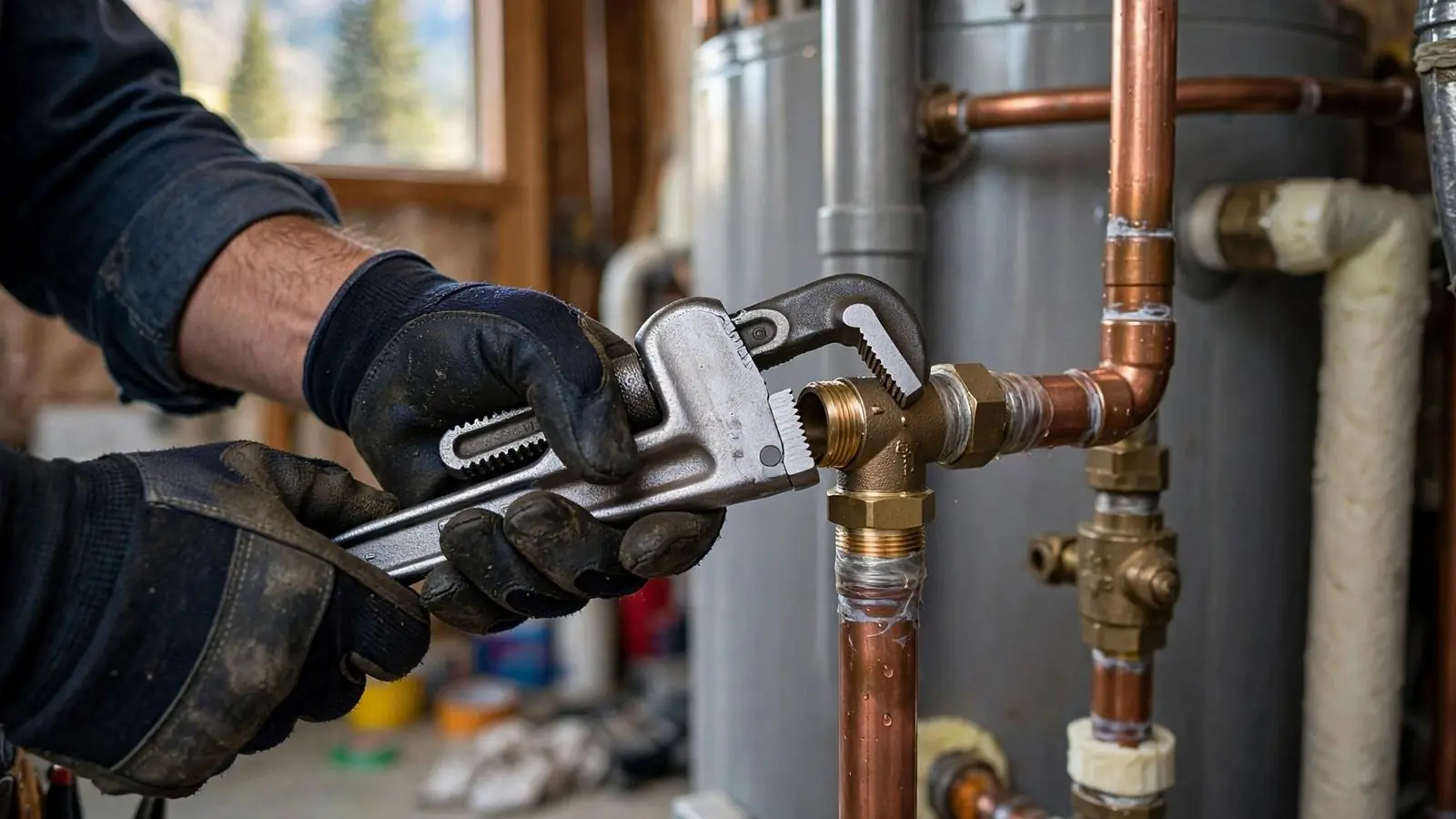
No hot water in winter is miserable, but water on the floor is the true emergency. A leak from the tank body means the steel has failed. A leak at a fitting or the relief valve may be repairable. Either way, closing the cold supply stops the refilling.
Do this before the plumber arrives
These steps limit damage and keep the area safe.
Hard water and water heaters in Lynwood
Liberty Utilities' Lynwood system report lists hardness between 99 and 220 ppm, averaging 160 ppm, or about 9 grains per gallon. In South Gate, the city's 2021 report averaged 226 ppm. Water that hard leaves scale on heating elements and sediment on the tank floor.
That is why we flush tanks and check anode rods during many repair visits. Sediment makes a gas burner work harder and a rumbling noise common. A coated element burns out sooner. If scale is the cause, a water softener reduces the load on every fixture, not just the heater.
Common faults we repair
Signs your water heater needs service
- No hot water or only lukewarm water.
- A pilot light that will not stay lit.
- Rumbling or popping noises from sediment.
- Rusty or discolored hot water.
- Water around the base of the tank.
- A relief valve that drips or discharges.
On an electric unit, we test the thermostats and heating elements with a meter. A burned-out element or a tripped high-limit switch is a quick fix. On a gas unit, we check the thermocouple, gas control valve, burner and venting. A dirty burner or a worn thermocouple is common.
The relief valve and the discharge pipe are safety components. A valve that weeps may be reacting to thermal expansion rather than failing. The California Plumbing Code addresses expansion tanks in section 608.3, so a missing tank in a closed system can explain a dripping valve.
| Finding | Usually repair | Usually replace |
|---|---|---|
| Failed element or thermostat | Yes, if the tank is sound | If the tank is old and corroded. |
| Pilot or thermocouple | Yes | Rarely. |
| Sediment buildup | Flush if the tank is sound | If the tank floor is damaged. |
| Leak from fittings | Often yes | If the tank is corroded. |
| Leak from the tank body | No | Yes. |
Age matters, because tanks near the end of a typical service life can fail within months of a repair. If yours is old and needs a major part, we will lay out the repair against replacement so you can choose with the numbers in front of you.
Gas and safety
Southern California Gas tells customers who smell gas to leave the area immediately, avoid anything that could spark, and call SoCalGas at 1-800-427-2200 from a safe place. Call 911 as well if there is danger. Do not try to repair a gas leak yourself. Our technicians can work on gas water heaters once the area is cleared.
Water heater work follows the California Plumbing Code, which is based on the Uniform Plumbing Code (UPC), and the state's bracing standard in Health and Safety Code section 19211.
Tell us gas or electric and the age of the tank. We will plan the visit so the right parts are on the truck.
What affects the price of water heater repair
We give a clear price before work starts. These are the factors.
Home policies commonly cover sudden water damage from a leaking tank but not the heater itself. Photograph damage and ask your insurer. Want your real number? Call (213) 672-5590.
For homes in the 90280 ZIP code, our South Gate page has local details.
Common questions about water heater repair
Yes. Our 24/7 line is answered day and night. If the tank is leaking, shut off the cold supply and the power or gas, then call.
On an electric unit, a failed element, thermostat or tripped breaker is typical. On a gas unit, a pilot that will not stay lit or a bad thermocouple are the usual causes.
Sediment on the tank floor traps water that boils beneath it. Flushing the tank often reduces the noise and extends the heater's life. Hard water makes this common.
If the leak is from a fitting, relief valve or connection, yes. If water is coming from the tank body, the tank has failed and needs replacement.
Tank units commonly last about 8 to 12 years, depending on water quality and maintenance. Hard water and neglected flushing can shorten that.
Yes. See our tankless water heater page for flushing and repair details.