
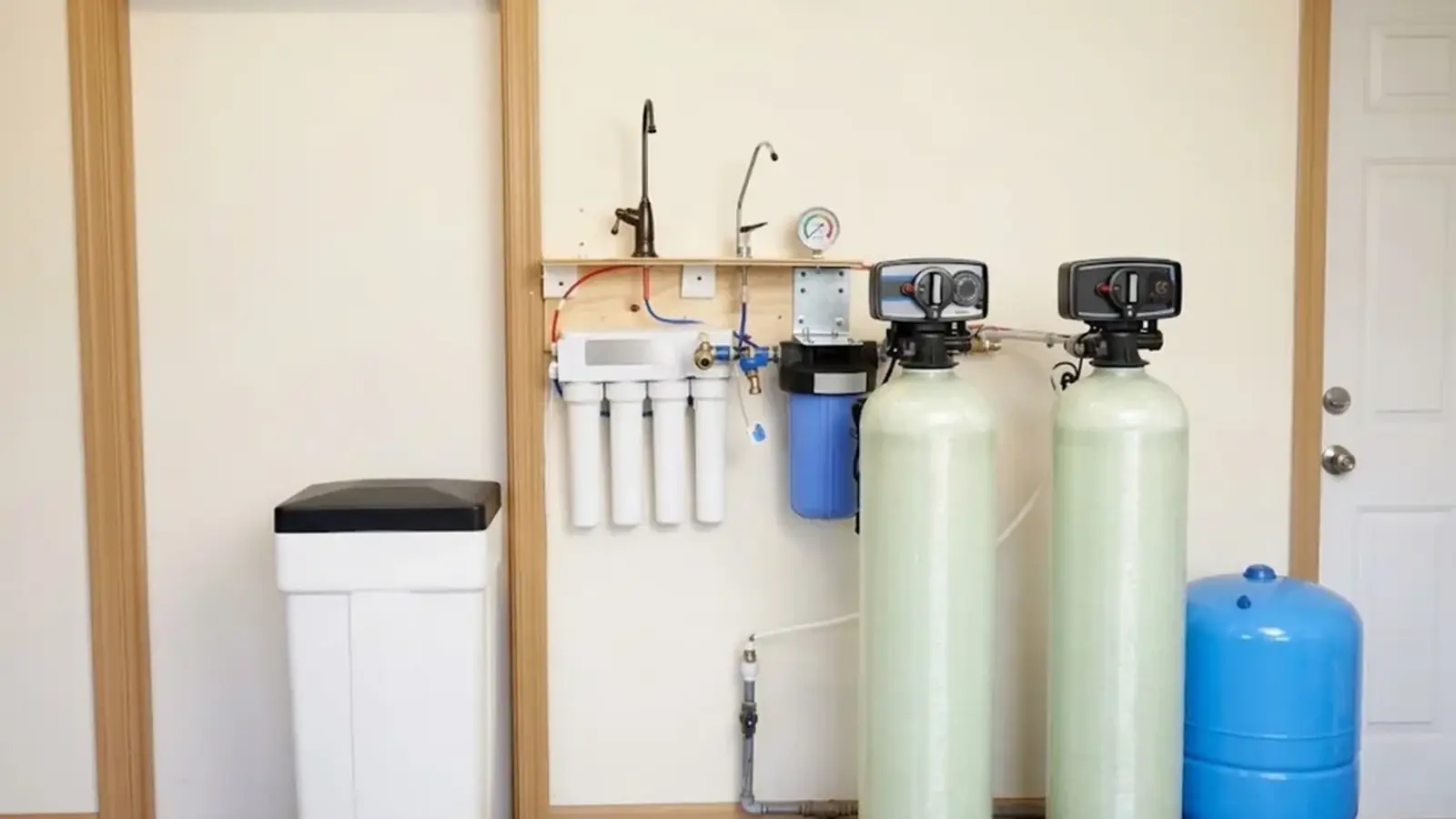
What the job involves
- Choose a location on the main line after the point where water enters the house and before the water heater.
- Shut off the main water valve and drain the line.
- Cut into the pipe and add the inlet and outlet connections, with a bypass valve.
- Route the drain hose to an approved drain with an air gap.
- Connect the brine tank overflow line if the unit has one.
- Plug in the control valve and program the settings.
- Open the water slowly, purge air and check every joint for leaks.
- Run a regeneration cycle and test the water.
Each step is reasonable. The risk is in the details: cutting into the line in the right place, making joints that do not weep and getting the drain right.
The parts that trip people up
| Step | Common mistake | Result |
|---|---|---|
| Location | Softener placed after hose bibs or the heater | Soft water outdoors or hard water at the heater. |
| Pipe connection | Poor joint or wrong fitting for the pipe type | Leaks inside a wall or garage. |
| Bypass | No bypass valve fitted | Water must be turned off to service the unit. |
| Drain | No air gap | Contaminated water can siphon back. |
| Power | Unit plugged into a switched outlet | Settings or regeneration lost. |
| Old pipe | Cutting into corroded galvanized or brittle copper | Broken line that spreads the problem. |
Pipe type matters
Modern push-fit and crimp fittings make connecting copper, PEX or CPVC easy. Galvanized steel is a different story. Old galvanized pipe corrodes inside and threads can crack when disturbed. Cutting into a line like that can turn a softener install into a section of repiping.
The drain and the air gap
A softener flushes wastewater during regeneration. That water must reach a drain without any path for it to flow back into the softener. The standard way to do this is an air gap, a physical space between the drain hose and the drain it empties into.
A hose pushed down a standpipe with a tight seal is not an air gap. That is one of the most common mistakes. If the drain backs up, wastewater can be pulled back into the unit.
Do you even need a softener
Test your tap before you spend. A home test kit or a lab test gives your hardness in grains per gallon or milligrams per liter. Utility reports describe the water the utility delivers, and your home plumbing and your address may differ from the average.
Signs a softener may help
- White crust on faucets and showerheads.
- Spots on dishes and glassware.
- Soap that does not lather well.
- Scale inside the water heater.
- Stiff laundry and dry skin.
- Short appliance life.
A fair verdict
If the unit sits in a garage with exposed copper or PEX, there is a floor drain nearby and the main line is easy to reach, a careful homeowner can do it. If the pipe is galvanized, the line is in a wall or the drain is far away, a plumber is the safer choice.
Setting it up after the install
Once the unit is plumbed, set the hardness value in the control head from your test result. A setting that is too low leaves hard water, and one that is too high wastes salt and water. Fill the brine tank with the salt type the maker specifies and keep the level above the water line.
Plan on a first check after a week. Confirm the regeneration schedule, test the water at a tap and look at the drain and the joints once more. A slow weep at a new fitting shows up in days, not hours.
Last, mark the bypass valve and tell everyone in the house what it is. If the unit ever fails or needs service, the bypass keeps water flowing while you wait.
What this means for Lynwood homes
Liberty Utilities' water quality report for its Lynwood system lists total hardness from 99 to 220 ppm, averaging 160 ppm, about 9.4 grains per gallon. The City of South Gate's 2021 report averaged 226 mg/L, which is about 13 grains per gallon at 17.1 mg/L per grain. Test your own tap to see what you actually get.
Census estimates put about 47 percent of Lynwood housing before 1950. Many of those homes have galvanized lines at the main, which is the case where a plumber is the better call before any cutting begins.
The City of Lynwood adopts the California Plumbing Code in Chapter 11-9 of its municipal code. Ask the community development department whether your softener install needs a permit.
Call to schedule a visit. We will check the pipe, the drain and the location and give a clear price.
If scale is already damaging a heater, water heater repair may be needed too. Homes in the 90280 ZIP code are covered through our South Gate page.
Questions homeowners ask about this
Many handy homeowners can, if the pipe is accessible, the drain is near and the fittings suit the pipe type. Old galvanized lines and distant drains are reasons to call a plumber.
On the main line after it enters the house, with a bypass valve, and ideally before the water heater. Outdoor hose bibs are often kept on hard water.
Salt-based softeners do. The drain must have an air gap.
A plumber often finishes in a few hours. A first-time DIY install may take a day.
Yes. A home test kit or lab test shows your real hardness. Utility reports describe the delivered water, not your tap.
About 47 percent of the housing dates before 1950, and cutting into old galvanized pipe can break it or loosen threads.