
Stop the water first
- Close the fixture shutoff if the leak is at a sink, toilet or appliance.
- If you cannot find the source or the valve will not close, turn off the main water valve to the house.
- Open a faucet at the lowest point to relieve pressure.
- Switch off power to any wet area if water has reached outlets or appliances.
- Move belongings out of the water's path and soak up standing water.
- Photograph everything with the date visible, for insurance.
The main valve is usually at the front of the property near the meter, or where the line enters the house. Learn where it is before you need it. A valve that has not been turned in years can stick, so test it once while nothing is wrong.
Finding a hidden leak
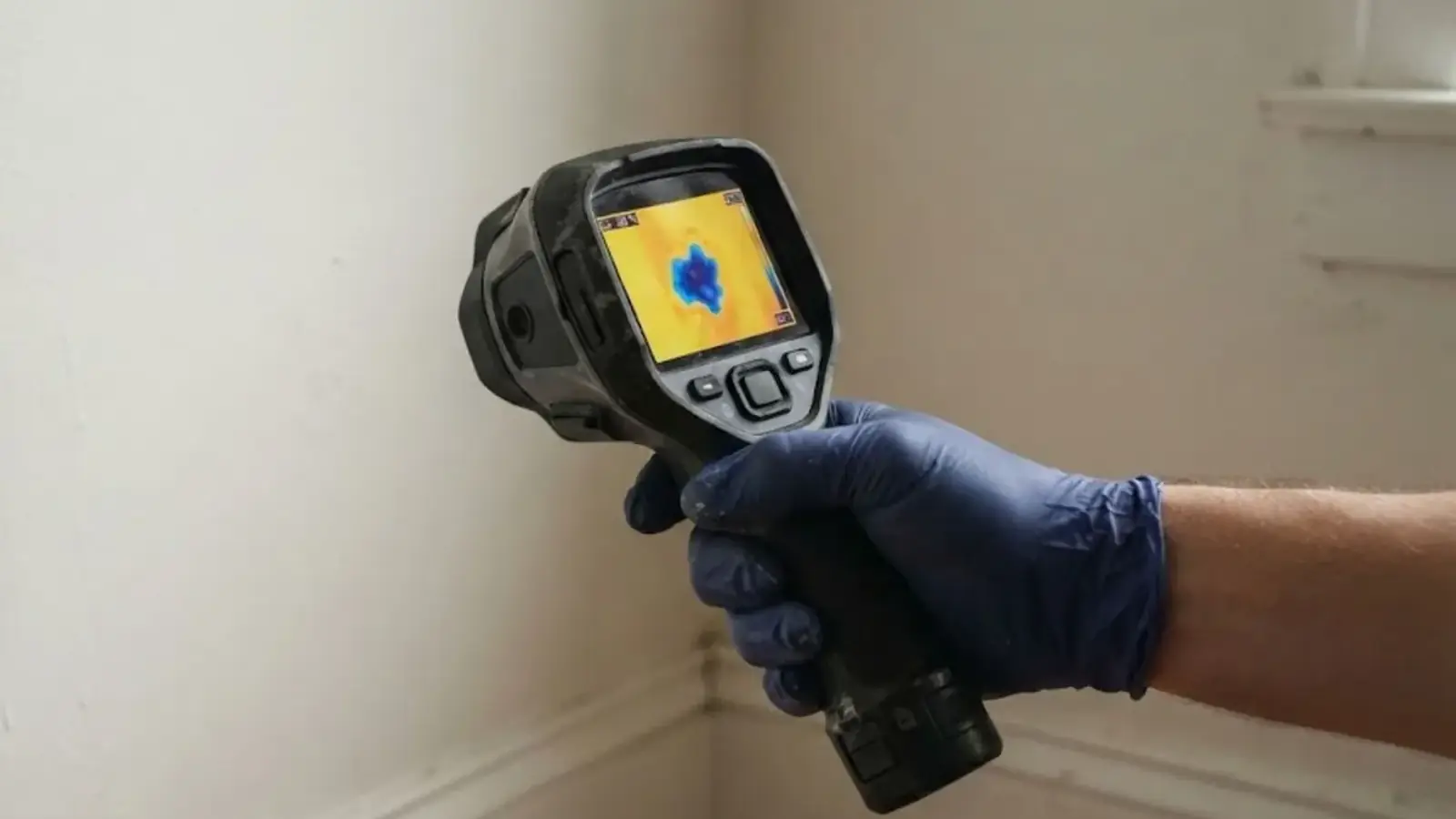
Signs of a hidden leak include a water bill that rises with no change in use and the sound of running water when everything is off. Damp or warm spots on a floor, a mold smell and a meter that moves with all fixtures closed are also warning signs.
The meter test
- Turn off every faucet and appliance that uses water.
- Find the meter and note the leak indicator or the dial reading.
- Wait fifteen minutes without using any water.
- Check again, and a moving dial or indicator means water is going somewhere.
- Close the main valve and check once more to tell a house leak from a street-side one.
If the meter moves with the main valve closed on the house side, the leak may be on the utility's side of the meter, and your water provider should be told. If it stops when you close the main, the leak is on your side.
Where leaks usually hide
| Location | Clue | Typical repair |
|---|---|---|
| Under a sink | Damp cabinet floor | Replace a supply line or fitting. |
| Behind a toilet | Soft floor, stained wall | Replace the supply or the seal. |
| In a wall | Stain, warm spot, mold smell | Open the wall, repair the pipe. |
| Under a slab | Warm floor, sound of running water | Locate, then reroute or repair. |
| Outdoor line | Wet soil, green patch | Dig and repair the line. |
| Water heater | Pooling at the base | Repair a fitting or replace the tank. |
Patch or larger repair
A single failed fitting or a split in an accessible pipe is a patch job. Repeated leaks in different places in a short time mean the pipe is wearing out, and more patching will keep costing you. At that point repiping is worth pricing against a string of repairs.
Slab leaks are a special case. Lines under a concrete floor cannot be reached without breaking the slab or rerouting the pipe overhead. Our slab leak repair work starts with finding the exact spot, so the repair is as small as it can be.
Insurance and documentation
Home policies often cover sudden and accidental water damage, but not gradual leaks or the wear that caused them. Photograph the damage, keep damaged materials until the insurer says otherwise and report the leak promptly. Read your policy for the specific wording.
Preventing the next leak
Most leaks give warning before they fail. Check under every sink twice a year, look at the supply lines on toilets and washing machines and replace braided lines that show rust or bulging. Rubber washing machine hoses are a common failure, and a few minutes of inspection is cheap compared with a flooded laundry room.
Know your water pressure too. High pressure strains every joint and fixture in the house. A simple gauge on a hose bib shows it, and a regulator at the main can bring it down. If the pressure is high and you have never checked it, a leak elsewhere may be coming.
Finally, write down where your main valve is, show everyone in the household how to close it and keep a flashlight near it. In an emergency, the first two minutes decide how much water reaches the floor.
What this means for Lynwood homes
Census estimates put about 47 percent of Lynwood housing before 1950 and about 35 percent in the 1950s and 1960s. Galvanized steel and early copper in those homes corrode from the inside, and pinhole leaks and splits follow.
Liberty Utilities operates a Lynwood water system and lists customer service at 1-800-727-5987. Your bill names your provider, and the provider is the one to call if the leak seems to be on the street side of the meter.
The City of Lynwood adopts the California Plumbing Code in Chapter 11-9. Ask the community development department whether your repair needs a permit.
Leak repairs follow the California Plumbing Code, which is based on the Uniform Plumbing Code (UPC).
Shut off the main and call the 24/7 line. Tell us where it shows and what you have done.
Homes in the 90280 ZIP code across the line are covered through our South Gate page.
Questions homeowners ask about this
A rising bill with no change in use, the sound of running water when everything is off and a meter that moves with all fixtures closed are the main signs.
Usually at the front of the property near the meter or where the line enters the house. Find it before you need it.
Simple fixes like a loose fitting or a worn supply line, yes. Leaks in walls, under slabs or on the main line need a plumber.
Many policies cover sudden damage but not gradual leaks or wear. Read your policy and report promptly.
Your water provider. In the Liberty Utilities Lynwood system, customer service is 1-800-727-5987, and your bill names your provider.
About 47 percent of the housing dates before 1950, and older galvanized and copper pipe corrodes from inside over decades.