Where plumbing and heating overlap
| System | Plumber | HVAC contractor |
|---|---|---|
| Tank water heater | Yes | Sometimes. |
| Tankless water heater | Yes | Sometimes. |
| Water heater venting | Yes | Sometimes. |
| Gas line to a water heater | Yes | Sometimes. |
| Furnace or wall heater | Gas line connection in some cases | Yes. |
| Air conditioning and ductwork | No | Yes. |
| Thermostat for the home | No | Yes. |
We work on water heating, plumbing and the gas and venting that serve water heaters. We do not service furnaces, air conditioning or ductwork, and we will say so when you call.
Water heating is the biggest overlap
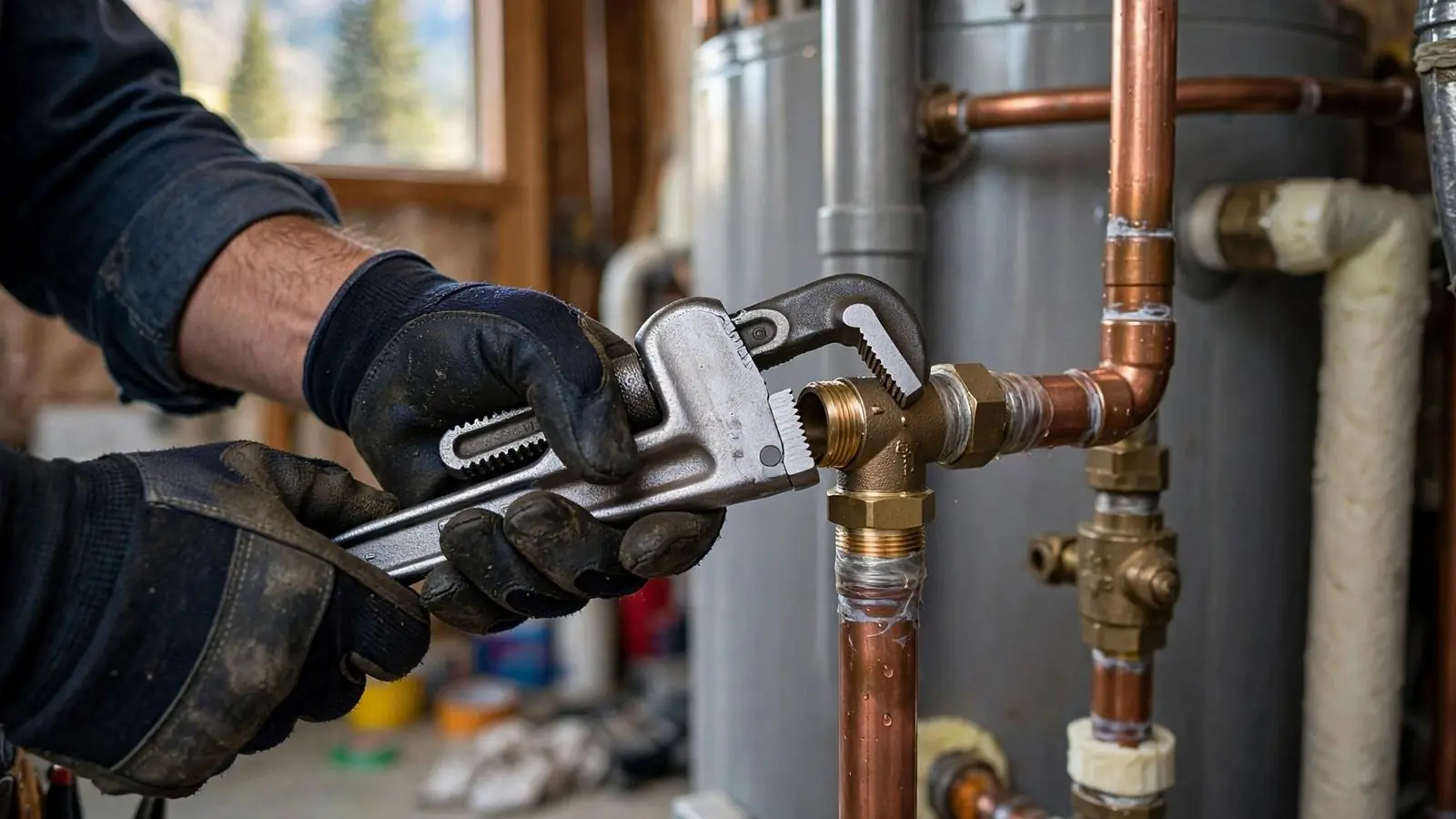
Heating water is one of the largest energy uses in a home. Tank, tankless and heat pump water heaters are all plumbing equipment with heating components. When one fails, you need a plumber who handles water, gas or electric connections and the safety devices together.
Our pages on repair, replacement and tankless units lay out what we handle and what to expect.
Gas, safety and venting
Gas appliances need a safe gas supply, a correct vent and enough combustion air. A leaking gas connection or a blocked vent is a safety problem. Southern California Gas tells customers who smell gas to leave the area, avoid anything that could spark and call SoCalGas at 1-800-427-2200 from a safe place.
Safety checks for any gas water heater
- A working carbon monoxide alarm near sleeping areas.
- A vent pipe that is connected, sloped and free of rust holes.
- No stored paint, gasoline or cleaners near the heater.
- A relief valve with a discharge pipe routed downward.
- Seismic strapping, which California requires.
- A sediment trap and shutoff on the gas line.
Seismic strapping and the code
California Health and Safety Code section 19211 requires water heaters to be braced, anchored or strapped against earthquake movement. A heater that is not strapped can tip and tear its gas and water connections, which is a fire and flooding risk.
Hydronic and radiant systems
Some homes have hydronic heating, where hot water circulates through baseboards or radiant lines. These systems blend plumbing and heating. They are less common in Southern California, and a specialist in that equipment should look at them. Tell us what you have and we will say whether we can help or who should.
For a home with a heater that is part of a combined system, the age and the maintenance history decide whether repair or replacement is wiser, and it is worth asking before you spend.
How to decide who to call
Start with the symptom. No hot water, a leaking tank, a failed pilot, a relief valve that discharges or a water heater vent problem belong to a plumber. No heat from the house, a furnace that will not start or an air conditioner that will not cool belong to an HVAC contractor.
Some problems straddle the line. A gas line that serves both a water heater and a furnace is one example. When you are not sure, describe what you see when you call. We will tell you whether it is ours, and we do not mind pointing you to the right trade.
Keeping the heating side healthy
Flush a tank water heater once a year in hard water, test the relief valve gently, check the anode rod every few years and keep the area around the heater clear. A tankless unit needs a descaling flush on a similar schedule. These small habits extend the life of the equipment and catch trouble early.
Test your carbon monoxide alarms when you change your clocks. A gas appliance with a blocked vent can fill a home with carbon monoxide, and the alarm is the only warning you will get.
What this means for Lynwood homes
Census estimates put about 47 percent of Lynwood housing before 1950 and about 35 percent in the 1950s and 1960s. If your home has a wall heater or a floor furnace, that is an HVAC or gas appliance matter, not a plumbing one. The water heater in the same home is the part we cover.
Liberty Utilities' Lynwood system report lists hardness from 99 to 220 ppm, averaging 160 ppm. Scale in water heaters raises energy use and shortens life, so a flush and an anode check are part of keeping the heating side healthy.
The City of Lynwood adopts the California Plumbing Code in Chapter 11-9, with permit fees going to the community development department. Ask what your water heater or gas job needs.
A plumber working on water heating follows the California Plumbing Code, which is based on the Uniform Plumbing Code (UPC).
Call the 24/7 line. We will tell you whether it is something we handle.
Homes across the line in the 90280 ZIP code are covered through our South Gate page.
Questions homeowners ask about this
Usually not. Furnaces, air conditioning and ductwork belong to an HVAC contractor. We handle water heating, plumbing and the gas and venting for water heaters.
Leave the area and call SoCalGas at 1-800-427-2200 from a safe place. Call 911 if there is danger.
Yes. California Health and Safety Code section 19211 requires it.
Gas work for a water heater is part of what we handle. Other gas appliances may need a different specialist.
A working carbon monoxide alarm, a sound vent, a clear area around the unit, a safe relief valve discharge and strapping.
Wall heaters and floor furnaces are space heating appliances, not water heating, so they fall to an HVAC or gas appliance contractor.