
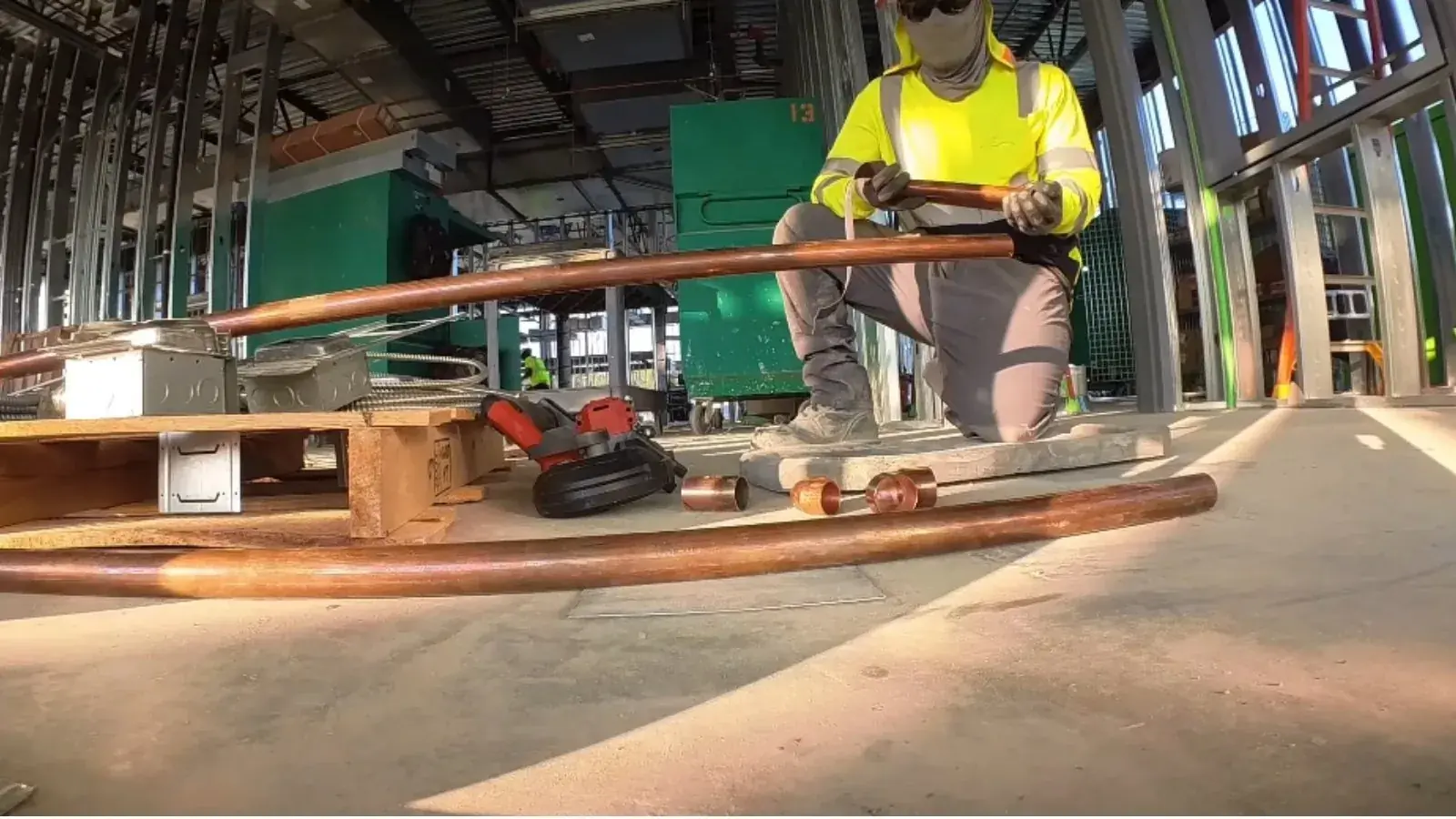
What rough-in includes
Parts of a plumbing rough-in
- Drain and waste lines sized and sloped to the main.
- Vent lines that let the drains run freely.
- Hot and cold supply lines to each fixture.
- Shutoff valves and stub-outs at fixture locations.
- Mounting blocks inside walls for fixtures.
- Pressure testing of supply and drain lines.
- Gas piping for appliances, where it applies.
Fixtures are not set at this stage. The tub, the toilet and the sink come later, at the finish stage. Rough-in puts the pipes where those fixtures will connect.
Why layout drives the cost
Plumbing is gravity at heart. Drains slope toward the main line, and every fixture needs a vent. A bathroom directly over or beside an existing one can share lines. A bathroom on the far side of the house needs a longer run, a new vent path and sometimes work in the slab.
| Choice | Effect on rough-in | Why |
|---|---|---|
| New bathroom beside an existing one | Smaller | Shares the drain and vent. |
| New bathroom far from the main drain | Larger | Longer run and extra venting. |
| Moving a toilet in a slab home | Larger | Slab must be opened and patched. |
| Kitchen island sink | Larger | Needs a special vent and floor run. |
| Laundry relocation | Moderate | New drain, supply and outlet. |
| Second story bath over the first | Moderate | Stacking drains simplifies it. |
The inspection comes before the drywall
Rough-in plumbing is inspected before it is covered. The inspector checks pipe sizes, slopes, venting, support and the pressure test. If it fails, the contractor corrects it, and the wall stays open. This is the cheapest moment to find a mistake.
The City of Lynwood adopts the California Plumbing Code in Chapter 11-9 of its municipal code, and permit fees go to the community development department. Ask the city which permits and inspections your project needs, and who schedules them.
Slab and crawlspace homes
Many Southern California homes sit on a concrete slab, and drain lines run beneath it. Adding or moving a fixture there means cutting the slab, laying the new line and patching the concrete. In a raised foundation, the pipes run in the crawlspace and are easier to reach.
Slab work is a strong reason to design the remodel around the existing plumbing where possible. Every foot of slab you do not cut saves money and time.
Common rough-in mistakes
The usual ones are poor venting, drains with too little slope, undersized supply lines, a missing cleanout and fixtures placed without checking clearances. Each can hide until the finish stage, when it is costly to correct. A written scope and a clear plan avoid most of them.
If your project uncovers old pipe, we tell you what we see and what the options are. Sometimes a remodel is the right time to replace a corroded section, and our repiping work handles that.
What to decide before rough-in starts
Choose your fixtures before the plumber roughs in. Each toilet, tub, shower valve and sink has its own rough-in dimensions, and the pipes must match. A change after the walls close means opening them again.
Decide where outlets, shutoffs and access panels will go, and whether you want a shutoff for each fixture. Think about future needs too. If you may add a bathroom or a laundry later, stub out a capped line now while the wall is open.
Finally, agree on who orders and supplies the fixtures and who sets them at the finish stage. A clear written scope that lists rough-in and finish separately avoids disputes about what was included.
What this means for Lynwood homes
Census estimates put about 47 percent of Lynwood housing before 1950 and a median build year near 1951. Additions to homes of that age connect to old drains that may be clay or cast iron, so a camera look at the existing lateral before adding fixtures is a good first step. See our sewer inspection page for what that involves.
About 31 percent of Lynwood housing units are in buildings with two or more units. In shared buildings, a remodel in one unit can affect shared lines, so coordinate with the property manager.
Liberty Utilities' Lynwood system report lists hardness from 99 to 220 ppm. New supply lines and fixtures last longer when scale is controlled, so consider a softener at rough-in while the main is accessible.
Rough-in work is inspected against the California Plumbing Code, which is based on the Uniform Plumbing Code (UPC).
Call to schedule a visit. We will look at the layout and tell you what the plumbing takes.
Projects in the 90280 ZIP code across the line are covered through our South Gate page.
Questions homeowners ask about this
It is the installation of drains, vents and supply lines inside walls and floors before they are covered. Fixtures are set later.
Before the walls or floors are closed, so the inspector can see the pipes.
Likely. Lynwood adopts the California Plumbing Code and collects permit fees through its community development department. Ask the city for the specifics.
Drains slope and need vents. In a slab home, moving one means cutting and patching the concrete.
It is a good idea. A camera look shows whether the existing line can handle more fixtures.
About 47 percent of homes were built before 1950, so existing drains are often old clay or cast iron that must be checked before you add to them.