
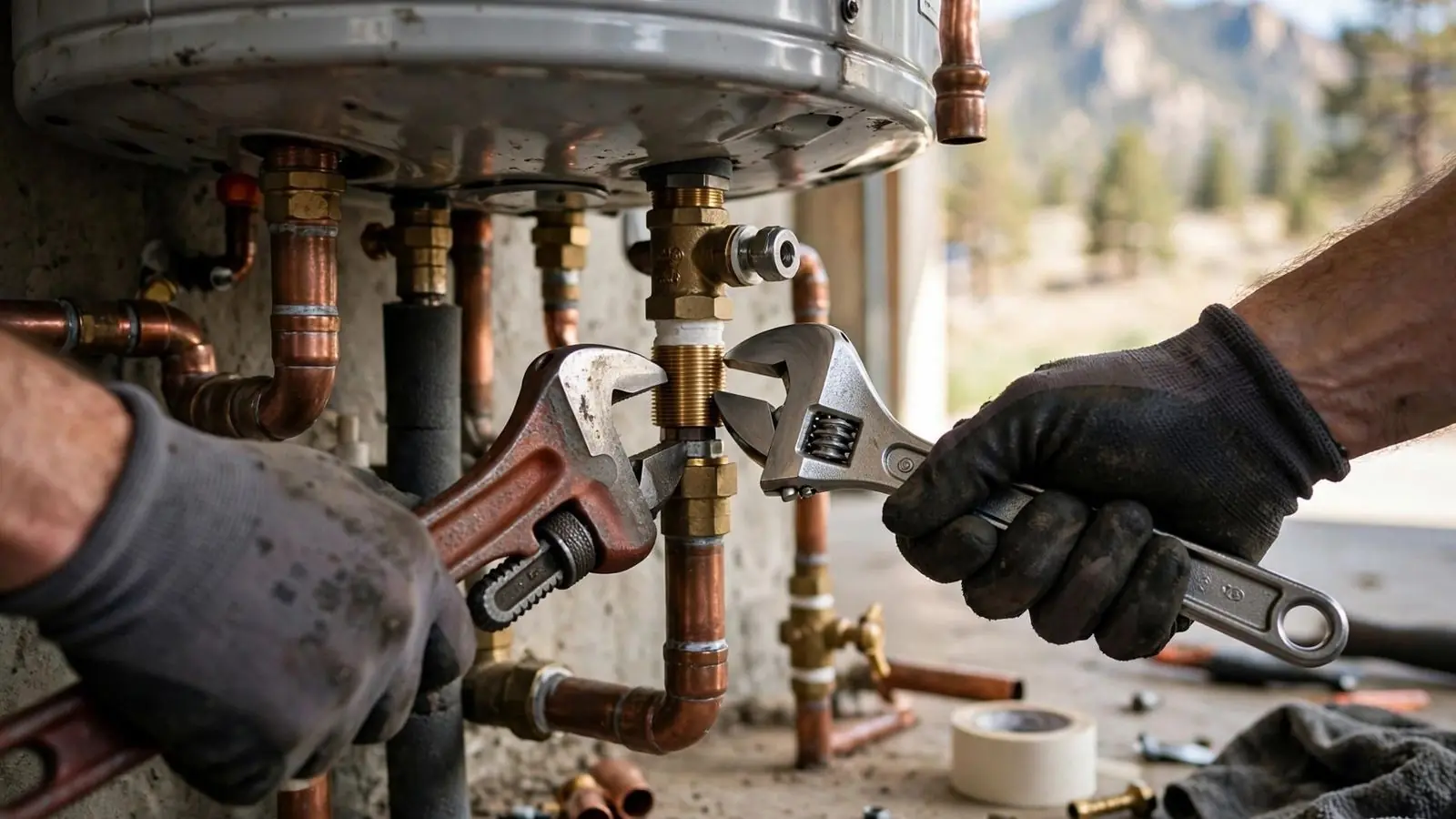
What the tank does
An expansion tank is a small steel vessel with a rubber diaphragm inside. One side holds air under pressure, and the other side connects to the water line. As the heater runs, expanding water pushes against the diaphragm and compresses the air. When water is used, the air pushes it back.
Without that cushion, the pressure spikes each time the heater fires. The relief valve opens to release it, which is why a valve that weeps after the heater runs is often a pressure problem rather than a bad valve.
Why many homes now need one
Homes used to be open systems. Water that expanded in the heater pushed back into the city main. A pressure regulator, a check valve or a backflow device on the supply line closes the system and removes that escape route. Many homes have one of these, even if the owner never knew.
The California Plumbing Code addresses thermal expansion in closed systems in section 608.3, which is why plumbers commonly add an expansion tank when they replace a heater in a closed system.
| Sign | What it suggests |
|---|---|
| Relief valve drips after the heater runs | Pressure spikes from expansion. |
| Pressure gauge reads high at night | Thermal expansion with no relief. |
| Banging pipes on heater cycles | Pressure or water hammer. |
| Short life of faucet seals and toilet fill valves | High pressure wearing parts. |
| Known pressure regulator at the main | Likely a closed system. |
Checking your pressure
A simple pressure gauge screws onto a hose bib and shows your static pressure. High readings are hard on every fixture. A reading that climbs after the heater has been running points to thermal expansion. A plumber can also check the regulator, since a failed regulator can cause the same symptoms.
What to check before you buy a tank
- Static water pressure at a hose bib.
- Whether the system has a regulator or a check valve.
- The size of the water heater.
- The tank's air precharge, which must match the system pressure.
- Where the tank will hang or sit on the cold line.
- Support for the tank's weight.
- That the relief valve discharge pipe is routed safely.
Installing the tank
The tank tees into the cold water line on the supply side of the heater, usually with a shutoff and a drain nearby. Small tanks can hang from the pipe, and larger ones need a support. The air precharge has to match the incoming pressure, and it is set with a tire gauge before the tank is filled.
Sizing depends on the heater's capacity and the water pressure. Your installer reads the manufacturer's chart. A tank that is too small never fully protects the system.
While the work is under way, we also inspect the relief valve and its discharge pipe, the cold shutoff and the seismic strapping. California Health and Safety Code section 19211 requires new and replacement water heaters to be braced, anchored or strapped, and an expansion tank adds weight to the pipe that the strapping should account for.
Safety around the tank
The relief valve is a safety device. Never cap it or plug its discharge pipe. If it discharges steadily, call a plumber, because heat and pressure are both involved. The discharge pipe should run downward to a safe spot, and a plumber can confirm yours does.
Watch also for leaks from the tank body. A tank that weeps at the base after the connections are dry has corroded through and needs replacement. An expansion tank does not cure that, and adding one to a failing heater is wasted money.
If the heater is already old, price the expansion tank together with a new unit. Doing both on the same visit saves a trip and lets the installer size the tank to the new heater, with strapping, a fresh relief valve and a proper discharge pipe in the same scope.
What this means for Lynwood homes
Liberty Utilities operates a Lynwood water system, and its published report lists hardness from 99 to 220 ppm. Scale and sediment in the heater can add pressure-related trouble, so a yearly flush belongs on the same visit as an expansion tank check.
Ask your water provider for the pressure it delivers to your address if you do not know it. Your bill names your provider. A gauge at your own hose bib tells you what actually reaches the house.
The City of Lynwood adopts the California Plumbing Code in Chapter 11-9 of its municipal code, with permit fees going to the community development department. Ask what your water heater job needs.
The California Plumbing Code, which is based on the Uniform Plumbing Code (UPC), is the standard your installer works to.
Call to book a visit. We will test the pressure and tell you whether an expansion tank fits.
If your heater is old, an expansion tank is also a good point to price a new unit. Homeowners in the 90280 ZIP code are covered through our South Gate page.
Questions homeowners ask about this
It absorbs the extra volume when water heats and expands, so pressure does not spike in a closed system.
A pressure regulator, check valve or backflow device on the supply line usually means yes. A plumber can confirm.
Pressure from thermal expansion is a common cause. A worn valve or very high supply pressure can also be to blame.
They can fail. A tank that is waterlogged or has lost its air charge no longer protects the system. A plumber can test it.
The California Plumbing Code addresses thermal expansion in closed systems in section 608.3. Ask the city what applies to your job.
Hardness reported at 99 to 220 ppm in the Liberty Utilities Lynwood system leaves scale and sediment in the heater. A yearly flush helps.